If you own or manage a building in Hagerstown or Frederick, you probably know the roof is one of those things that matters every day but rarely gets your attention until something goes wrong. And when it does, it’s never at a convenient time. A small leak during a summer storm. A section of membrane lifting after a freeze-thaw cycle. The kind of disruption that affects customers, employees, and operations: all at once.
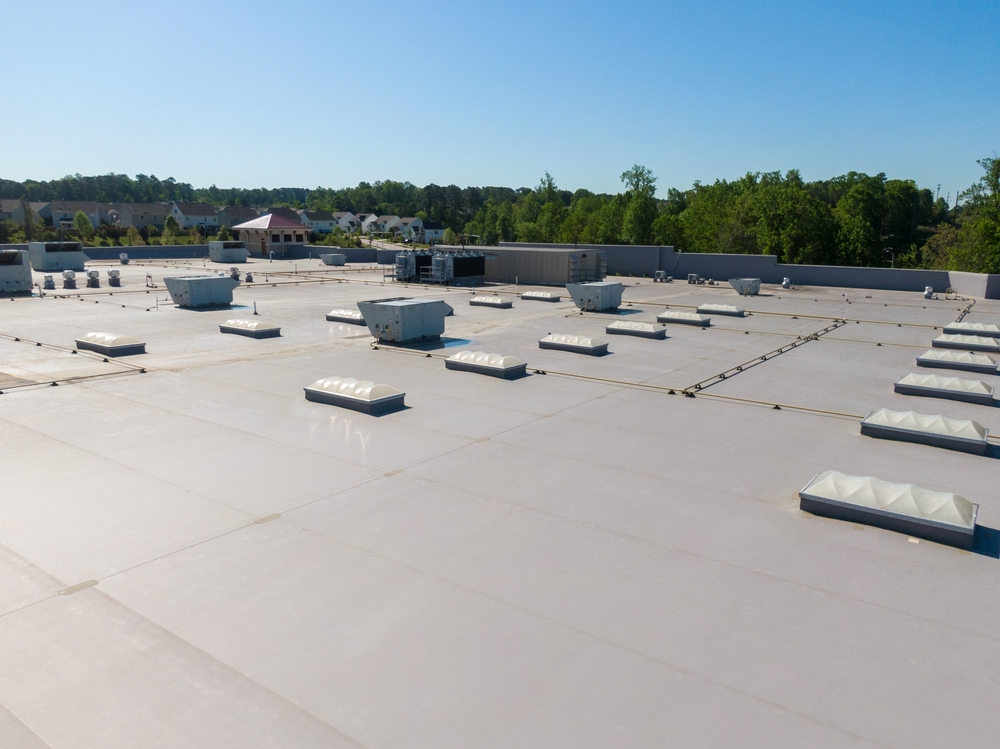
We see this constantly across Washington and Frederick Counties. The life cycles of commercial roofs in our region are not simply a product of quality in materials, but also in our weather, building design, and how often a roof is kept up. And while many online articles try to generalize roof lifespans into some figures, the truth is: your roof lasts as long as you take care of it.
That’s what this guide is about: clear, straightforward information that helps business owners understand just how long commercial roofs generally last, what real maintenance looks like, and how to plan ahead rather than react to emergencies.
What a Roof’s “Lifespan” Really Means
Ask five different people, and you will get five different answers regarding how long a commercial roof lasts. Some will say 15 years, others say 30. The reason the estimates can be so broad is very simple: lifespan isn’t a fixed number. It’s a combination of factors:
- The roofing material
- How it was installed
- How much sun, wind, and moisture it deals with.
- Whether small issues are addressed straight away.
- Structural movement of the building over time
Even the manufacturers describe life expectancy as a range, and not a promise. Owens Corning states in its system aging guide that materials will react to various conditions such as UV exposure, insulation, ventilation, and overall system design.
Commercial roofs are designed to work hard: they hold off heat, support HVAC equipment, direct water flow, and generally take a beating from weather cycles unique to our region. As business owners begin to think of the life span of a roof more as a maintenance-driven timeline rather than a fixed number, suddenly everything becomes easier to plan.
How Long Common Commercial Roof Types Last in Our Region
Here is what we typically see in Hagerstown and Frederick, not textbook numbers, but real-world expectations based on local conditions and what we’ve experienced over the years.
EPDM (Rubber Roofing): That’s what most people use on flat and low-slope roofs. What we see around here, if it’s maintained well, is that it usually lasts about 20-25 years. If the seams open or flashing starts to crack and nobody catches it early, that number drops fast.
TPO Roofing: TPO is a newer membrane, and it reflects UV pretty well. In Maryland, on an average, we see 18 to 22 years on the buildings. It performs best when it’s cleaned and inspected annually, especially after winter. That’s because expansion and contraction over time can weaken welds.
Modified Bitumen: A workhorse system: It holds up well in changing temperatures, which is useful in our freeze-thaw-heavy winters. Many last 20–30 years, depending on how many layers are used and whether the surface is protected with granules.
Metal Roofing: Metal is durable, but it’s not “set it and forget it.” Fasteners can work loose due to building movement. Sealants dry out. Panels shift. Well-maintained metal roofs can last 30 years plus but need periodic tightening and resealing to reach those numbers.
Coating Systems: Coatings extend the life of an aging roof. Coatings themselves do not replace the system but can buy 8-12 more years for businesses when applied at the right time.
Why Local Weather Plays a Bigger Role Than Most Owners Realize
Western Maryland has one of the more finicky climates when it comes to flat and low-slope roofing: heavy summer storms, long stretches of humidity, and sharp winter temperature swings combine to age commercial roofing materials at a rate much faster than many owners might expect.
A few local factors that shorten life span:
- Freeze–thaw cycles cause the membranes to expand and contract, putting stress on seams.
- Ponding water on flat roofs causes premature cracking.
- High humidity and shade can encourage mold or algae
- Hail and windstorms weaken fasteners and surface layers
- Heat from rooftop HVAC units creates additional stress in some locations
Maintenance Schedules That Actually Work
Most of the problems that make commercial roofs fail aren’t major ones; rather, small ones that sit around for years. Nails back out, seams loosen, and debris blocks a drain. Individually, none of these things is particularly dramatic, but they add up.
A typical maintenance plan would read something like this:
Quarterly Walkthrough: Nothing complicated-just a set of eyes on the roof to spot debris, pooling water, or visible damage.
After every major storm: Especially windstorms, hail, and heavy rain events. Even if everything looks fine, some damage starts subtle.
Annual Professional Inspection: A roofing professional will check:
- membrane seams
- flashing
- drainage
- penetration points
- sealants
- surface wear
- fastener movement (for metal systems)
According to the National Roofing Contractors Association, building managers should inspect commercial roof systems at least twice per year and after major weather events to help extend service life and avoid costly damage.
How to Tell When Your Roof Is Nearing the End of Its Lifecycle
Most business owners spot the obvious signs: leaks, stains, or visible damage. The subtle signs matter even more:
- Recurring repairs in the same areas
- bubbling or blistering under the membrane
- shrinking around edges and corners
- uneven wear between sun-exposed and shaded sections
- granule loss (on modified bitumen)
- rusting or loose fasteners (on metal)
If you see a number of these problems combined, then it’s time to start planning.
Planning Ahead: Repairs, Re-Coating, or Full Replacement
The one thing we always tell business owners is that making the right decision early will save you far more than squeezing an extra year out of a failing roof.
A thoughtful plan includes:
Repairs: Best for isolated damage or newer roofs with the occasional issue.
Re-coating: The process is ideal when the roof is structurally sound but surface wear or weathering is accelerating.
Full Replacement: Stronger long-term value in cases when the system is aging, repairs are more frequent, or the building requires better energy performance.
We also encourage keeping a simple roofing log: repair dates, photos, small notes. It is very helpful for owners to see patterns and budget realistically.
How Topper Roofing Supports Local Businesses
At Topper Roofing, we have long worked with commercial properties across Hagerstown and Frederick. We have helped business owners plan smarter instead of reacting under pressure.
Whether you are trying to figure out how much life your roof has left, or deciding between repairs and replacement, we focus on giving you clear, honest answers, not sales pressure. Contact us if you need a professional assessment or if you just have some questions answered regarding your roof. We’re here to help you make the best decision for your business.