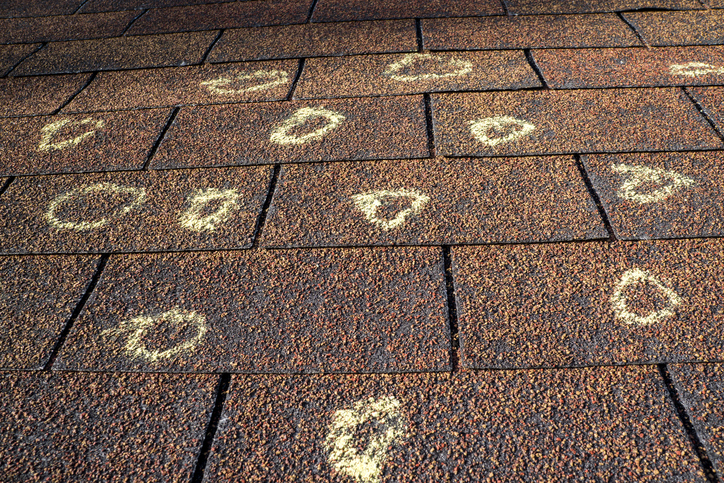
Insurance companies will send their inspectors, and these inspectors are often given special training on how to spot any hail damage on a roof.
Hail damage can devastate your roof, but how much hail damage does there need to be before you can consider repairing or replacing your roof? After we investigate some common myths about hail damage, we’ll give you some advice about determining the amount of damage hail can inflict on your roof, and what to do next.
Myth #1: No Visible Signs of Damage
If you have inspected your roof and see no visible signs of damage, that doesn’t automatically mean that no damage is present. Professional roofers should inspect the roof to determine the amount of damage that is there. Insurance companies will also send their inspectors, and these inspectors are often given special training on how to spot any hail damage on a roof.
Myth #2: No Missing Shingles
Missing shingles seem like an obvious indicator that your roof has been weakened by hail. High winds during a hail storm can easily dislodge roofing shingles and blow them away. But not all damage is immediately noticeable. The shingles can still be cracked open enough to allow slow leaks that can persist for months or years even after a hail storm has come and gone.
Myth #3: No Need for Insurance
You might also think that you won’t need to consult your insurance company. Even if an inspector informed you that there’s only a tiny amount of damage, you still have a case for an insurance claim. Although your roof was only minimally damaged, that damage can grow worse if left neglected for too long. Don’t worry about if your insurance carrier might cancel your coverage – many states have laws against that sort of thing happening. Regardless, you should check your state regulations and your insurance company’s policies about hail damage.
Determining Hail Damage to Your Roof
Now that we have uncovered the truth about some myths, what comes next? Here is what you should do after discovering legitimate hail damage to your roof. These steps will help you decide whether or not you should go ahead and seek roof repairs:
- Find “functional” hail damage: Functional hail damage is what your insurance company is willing to cover. Your insurance will want to discover how recent the damage was, or if multiple hail impacts over the years have contributed to the current condition of the roof.
- Check on different parts of your roof: Vents and exhaust caps are more vulnerable elements of your roof. Check on them before you inspect the integrity of your roof shingles. You’ll also want to check the vinyl used as trim around your windows and the condition of your roof flashing.
- How extensive is the damage? There are different levels of hail damage. These levels range from simple bruising to the asphalt underlays cracking. However, granule loss is another degree of damage that will not warrant full roof replacement.
Contact Topper Construction Today!
If you’re interested in getting some summer roofing work done or siding installed in your home, or would like a free estimate, contact Topper Construction. With Topper Construction, you’ll see the benefit of nearly three decades of experience. Contact Topper Construction at 301-874-0220 or email us at info@topperconstruction.com if you are interested in learning more. We can help you with projects in Delaware, Maryland, Pennsylvania, West Virginia, and Northern Virginia.