
Spring gutter problems and August gutter problems aren’t quite the same. In spring, most homeowners are dealing with what winter left behind and getting ready for spring rains. By August, gutters have had plenty of time to collect seed pods, twigs, pollen, and other debris. Then a summer thunderstorm can send a large amount of rain through the system in a short time.
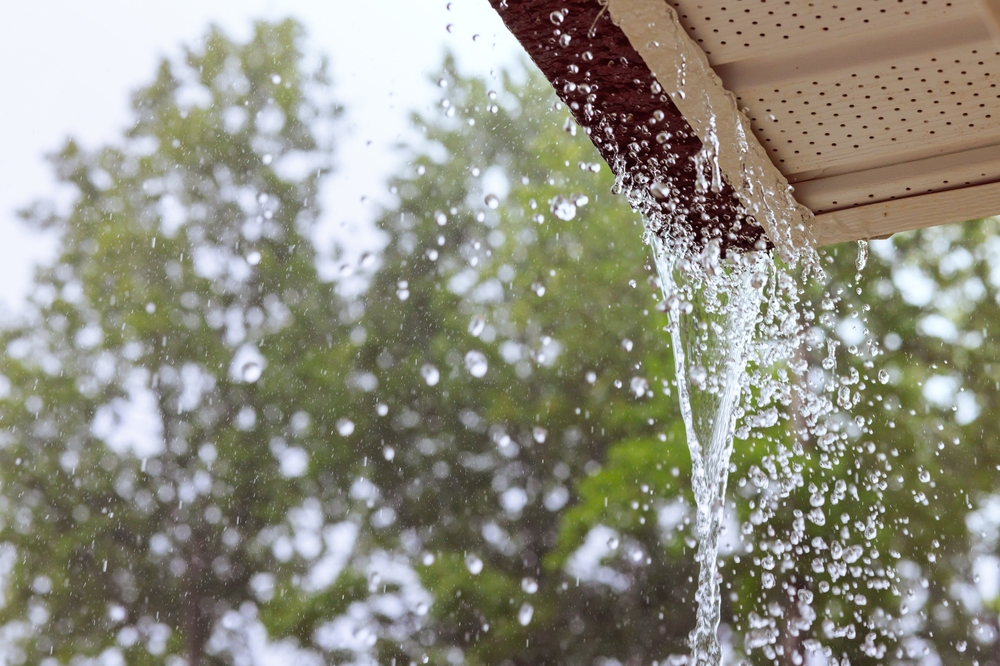
This is when the clogged gutter system becomes full very fast. There is already limited space available for the water to flow due to the buildup of waste material, and the sudden onset of rain water can flood the gutters very quickly.
If you were not having problems in the spring but now have a problem during summer thunderstorms, the problem may have been building for a long time before that storm arrived.
What Has Been Accumulating Since Spring
Leaves aren’t the only thing that gutters catch. Seed pods, small branches, pollen, roof debris, and many others can accumulate in the gutters during the summer. Even small amounts of such debris will add up to a lot after a few months and leave less room for the water to pass through.
The gutters may appear to be clean from the ground level but actually contain enough debris that prevents the water flow. Clogged gutters and downspouts can restrict water flow and cause overflow, especially when a heavy storm sends more water through the system than usual.
Why August Thunderstorms Can Cause Fast Overflow
Thunderstorms that occur during late summer can bring lots of rain within a very short period of time. While your gutters can easily manage normal rainfall, an intense rainfall can result in lots of water being poured into them.
The excess water will back up faster, leading to its overflow if any debris has clogged the passage. This is why even when your gutters work fine with normal rainfall, they may still overflow with heavy rainfall. The gutter system should withstand heavy rains without overflow.
Downspouts May Turn Out to Be the Bottleneck
A clean gutter system could still end up overflowing if the downspouts are not working right.
Debris might be blocking the downspouts or restricting the flow of water coming out of them. The downspouts’ extensions may be blocked, buried under soil, disconnected, or just discharging the water very near the house. This will cause the water to get pooled at the house’s foundation when it rains heavily instead of flowing away from it.
If you have some underground drainage pipes installed to carry the water away from your home, a clog in them or any damage that causes improper drainage can also cause such problems.
Cleaning the visible gutter isn’t always enough.
Signs Your Gutters Have Already Been Overflowing
You don’t always have to catch the problem during a thunderstorm. Your home and yard may show signs afterward.
Water stains below the gutter line. Dark streaks on fascia, siding, or other areas below the gutter can indicate that water has been spilling over the edge.
Mulch or soil washing away. If the ground below a gutter or downspout looks unusually disturbed after a storm, water may not be draining where it should.
Puddling near the foundation. Water collecting around the bottom of a downspout can indicate a blocked extension, poor drainage, or a discharge point that isn’t carrying water far enough away from the house.
Sagging or pulling gutters. A gutter that is sagging or pulling away from the fascia may have a support or drainage problem that deserves attention, particularly if it is also holding standing water.
Overflow that keeps happening after cleaning. If the gutters were recently cleaned and still spill water during every heavy storm, the problem may be related to the downspout, gutter slope, drainage layout, or the system’s ability to handle the roof’s runoff.
After a severe storm, it’s also worth checking the surrounding roof and exterior for visible damage rather than assuming every issue is simply a clogged gutter. Storm damage can affect more than the shingles themselves, so an obvious change after a major storm shouldn’t be ignored.
When Cleaning Isn’t Enough
A thorough gutter cleaning can solve many late-summer overflow problems when debris is the main cause. But recurring overflow deserves a closer look.
If gutters continue to overflow after they’ve been cleaned, or if you notice sagging sections, separated joints, poor drainage, or water collecting around the foundation, the issue may be with the system itself. The gutters may not have the right slope, a downspout may be restricted, or the drainage setup may not be moving water far enough away from the home.
Weather can put additional strain on the roof and exterior throughout the year, which is another reason to address recurring water problems instead of waiting for the next major storm. Seasonal weather can affect different parts of a home’s exterior, including areas connected to the roof and drainage system.
Before the Next August Storm
By August, your gutters have had months to collect whatever summer has sent their way. Most of the buildup happens gradually and goes unnoticed until a heavy storm puts the system to the test.
Checking gutters, downspouts, extensions, and drainage points before the next major storm can help catch a problem while it’s still manageable. If your gutters continue to overflow even after cleaning, it’s worth having the system checked rather than assuming the next storm will be different.
At Topper Roofing, we help homeowners in each city we cater to address roofing and gutter concerns before they turn into bigger problems. If you’re seeing recurring overflow or aren’t sure if your gutters are draining properly, contact our team to have the issue evaluated. You can also learn more about our homeowner roofing and gutter services.