Before inspecting the exterior of your home for damage after a storm, make sure the severe weather has passed and it is safe to be outside. If you see downed power lines, electrical hazards, or flooding, keep away from the area and immediately call 911.
Even if the coast is clear, continue to be aware of potential hazards.
A storm can inflict different types of damage on your home’s siding depending on the material. For example, wind or hail damage on vinyl siding can cause chipping or holes while aluminum or other metal sidings are more likely to experience dents.
Meanwhile, wood siding can be cracked and warped due to severe rainstorms. This could lead to mold and rot if the wood is untreated.
If you notice wind or hail damage on your siding that appears to be merely cosmetic, be mindful that this could be a point for moisture damage beneath the siding. Some damage might also be difficult to spot from the ground (especially in a multi-story home).
As noted above, there are several common types of siding storm damage. If your home features vinyl or wood siding, be on the lookout for:
· Cracking: Splits or cracks typically run parallel to the siding, often between the valley and ridges of the panel.
· Chipping: A small piece of siding that has broken off, typically at or near the bottom of a siding panel ridge. That’s where the panel is unable to absorb impact.
· Peeling: If you notice paint peeling away from your siding, this could be a sign of underlying moisture damage caused by a storm.
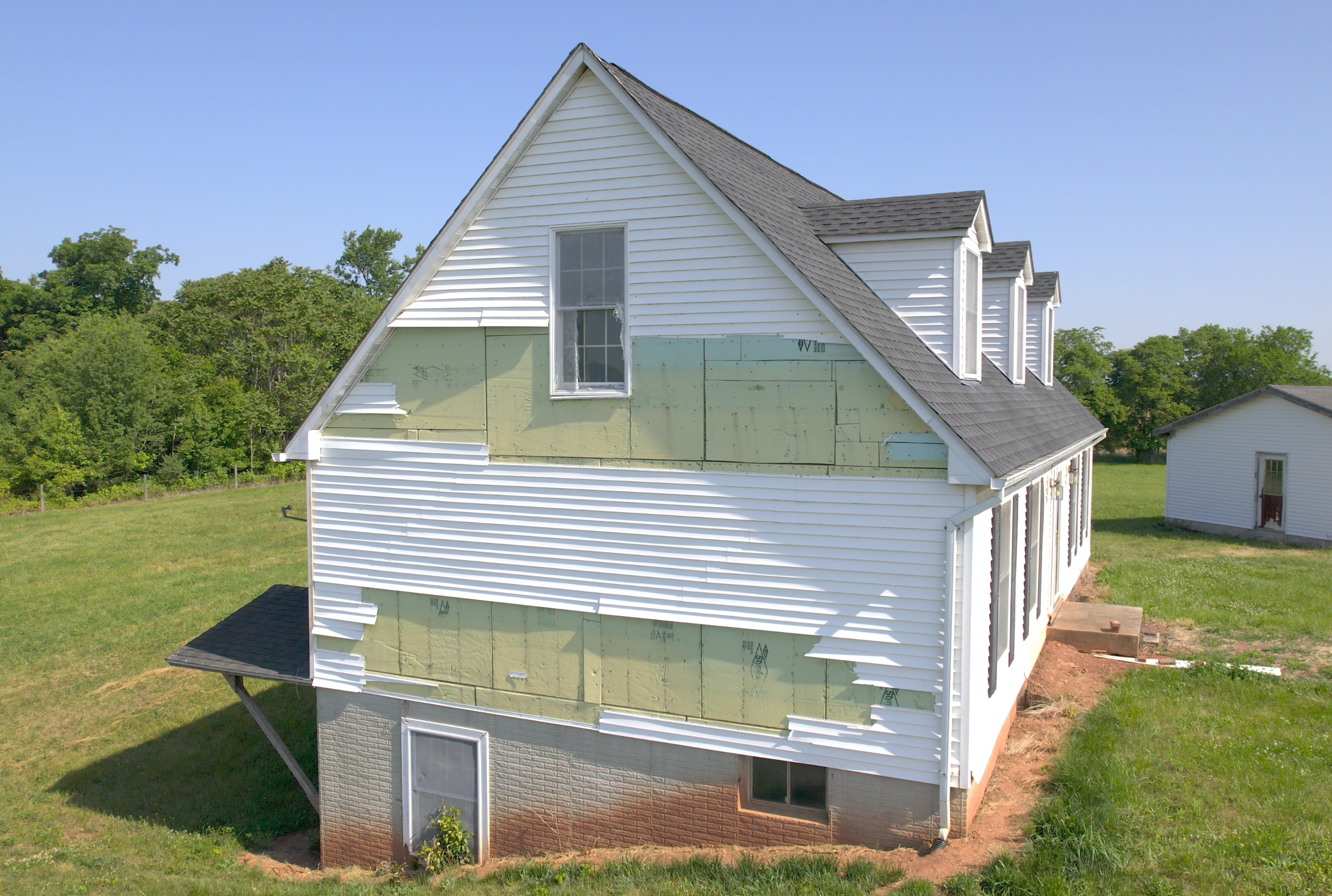
· Breaking and holes: During severe storms, wind or hail damage to the siding can cause holes or breaks. If your siding is broken or has holes in it, then it is no longer protecting your home from the elements and should be replaced as soon as possible to limit further damage.
And while metal siding solutions such as aluminum typically offer improved durability, they are still susceptible to damage. The most common signs of storm damage on aluminum siding are:
· Dings and dents: These can be caused either by flying debris or the result of hail damage on the siding. While they might not seem immediately worrisome, dings and dents can allow rust to form and lead to cracking or breaks.
· Displacement: During severe storms, metal or aluminum siding can be ripped off your home entirely from strong winds.