
When it comes to Maryland winters, we know the winds, temperature changes, and the occasional Nor’easter can take a toll on your roof. However, before the thunderstorms, winds, and rains of the spring season set in, we recommend taking a closer look at the damage before the storm clouds assemble.
As a reliable provider of roofing services in Maryland, Topper helps homeowners understand the difference between normal wear and tear and the potential for costly repairs down the road.
1. Lifted Shingles: A Small Gap Can Become a Big Leak
Sometimes, we see wind lift shingles slightly at the edges. This may not seem like a major problem to the untrained eye, but it can allow water to leak underneath the shingles.
If water is able to penetrate the shingles and get underneath them, it can then leak into the deck and the sheathing. Some things we recommend checking for include:
- Shingles that appear uneven or “flared” at the edges
- Cracks on the surface
- Lack of granules on the surface of the shingles
If any of these are observed, we recommend having the roof inspected before the spring storms arrive in full force.
2. Flashing Vulnerabilities: The Hidden Weak Spots
Flashing, which is the metal covering around chimneys, vents, and skylights, directs water away from these areas, but it also gets battered during windstorms. In the winter, we often find that wind can:
- Cause the flashing loosens or bends
- Damage the seal between the flashing and the roofing materials
- Create areas where the flashing was once sealed tightly
When flashing is compromised, we often see water damage occur in areas homeowners don’t normally inspect. We can detect these problems before water seeps into the walls or attic.
3. Minor Wind Damage vs. Major Leaks: How to Tell the Difference
Not all problems with your roof are emergency situations, but we always encourage homeowners to recognize the warning signs early. Some minor wind damage might include:
- A few shingles were damaged
- Loose granules in gutters
- Slightly lifted edges
Major leaks are often noticeable inside your home:
- Water stains on ceilings or walls
- Sagging in the drywall
- Drips during rain or wind
Even minor wind damage can turn into a bigger problem very easily. From our experience, early detection can prevent a small issue from turning into extensive repairs.
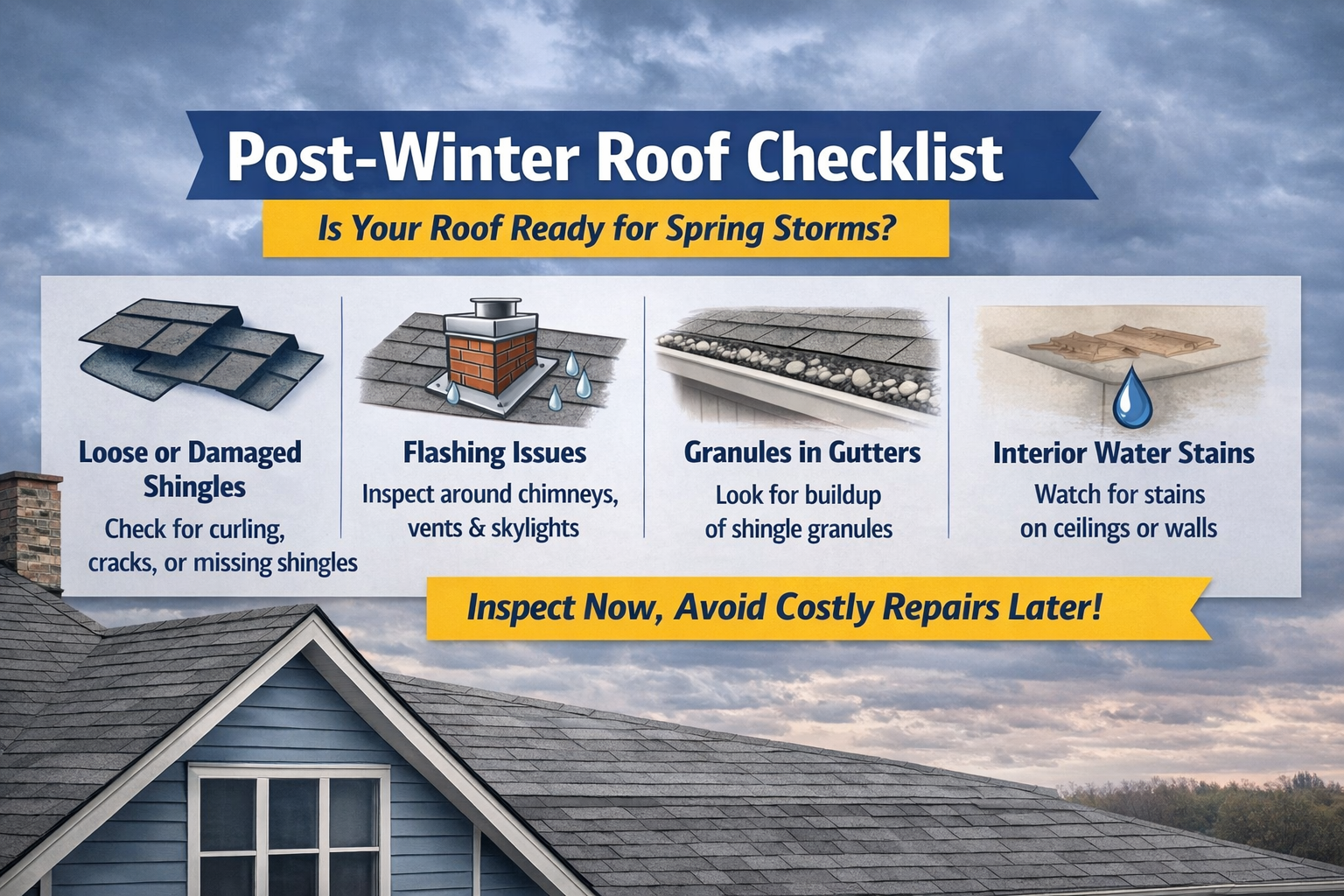
4. Post-Winter Roof Checklist
Before the next spring storm hits, we recommend making a visual inspection from the ground:
- Are any shingles curled or missing?
- Are gutters filled with loose granules?
- Is flashing tightly secured in place on chimneys and vents?
- Are there any signs of water stains inside the building?
These are the parts of the roof, shingles, flashing, and gutters that we typically see affected by harsh winter weather. Catching problems now can prevent bigger issues when spring storms arrive. As mentioned by Owens Corning, roof inspections after seasonal weather are critical to spotting subtle damage before it becomes major.
5. Why Proactive Repairs Save Money
While it may be tempting to take a “wait and see” attitude after a series of winter winds, we know that roofing problems tend to get worse with each storm cycle. That lifted shingle today could mean a leaky attic tomorrow.
Routine checks after the winter season help protect the integrity of your biggest investment: your home. According to GAF, seasonal weather conditions can cause shingles to deteriorate, loosen roof flashings, and stress roof materials, so it is crucial to carry out early roof inspections for maximum roof durability.
By addressing small issues now, you reduce the risk of emergency repairs and extend the life of your roof.
Get Your Roof Storm-Ready with Topper Roofing
Don’t let hidden wind damage become water damage. Our team at Topper Roofing will inspect your roof, identify vulnerabilities, and recommend practical repairs to protect your home from storm damage.
Schedule your spring wind damage inspection today and make sure your roof is ready for whatever Maryland weather throws next.