For most homeowners, when the roof comes to mind, it is likely in terms of damage, leaks, or even storms that have caused problems with the roof.
What is frequently overlooked by homeowners, however, is how much of an impact roof load can play in creating problems for your home’s roof.
At Topper Roofing, our roofing contractor team understands how roof load can impact your home’s structure, and many Maryland homeowners are surprised to learn that roofing problems can stem from excess weight rather than obvious damage.
The weight your roof needs to support depends on how much weight you have placed on it. But over time, snow, equipment, and even additional roofing layers can push it closer to its limit.
What “Roof Load” Actually Means
The term “roof load” refers to the weight that your roof can bear.
This includes:
- Permanent loads: from materials such as shingles and roofing
- Temporary loads: from elements such as snow, ice, and walking
There are different classifications of roof loads, depending on how the loads affect the roof’s structure.
Even if you don’t notice any problems with your roof, there’s always a maximum weight it can hold.
Snow and Ice: The Weight You Don’t See Coming
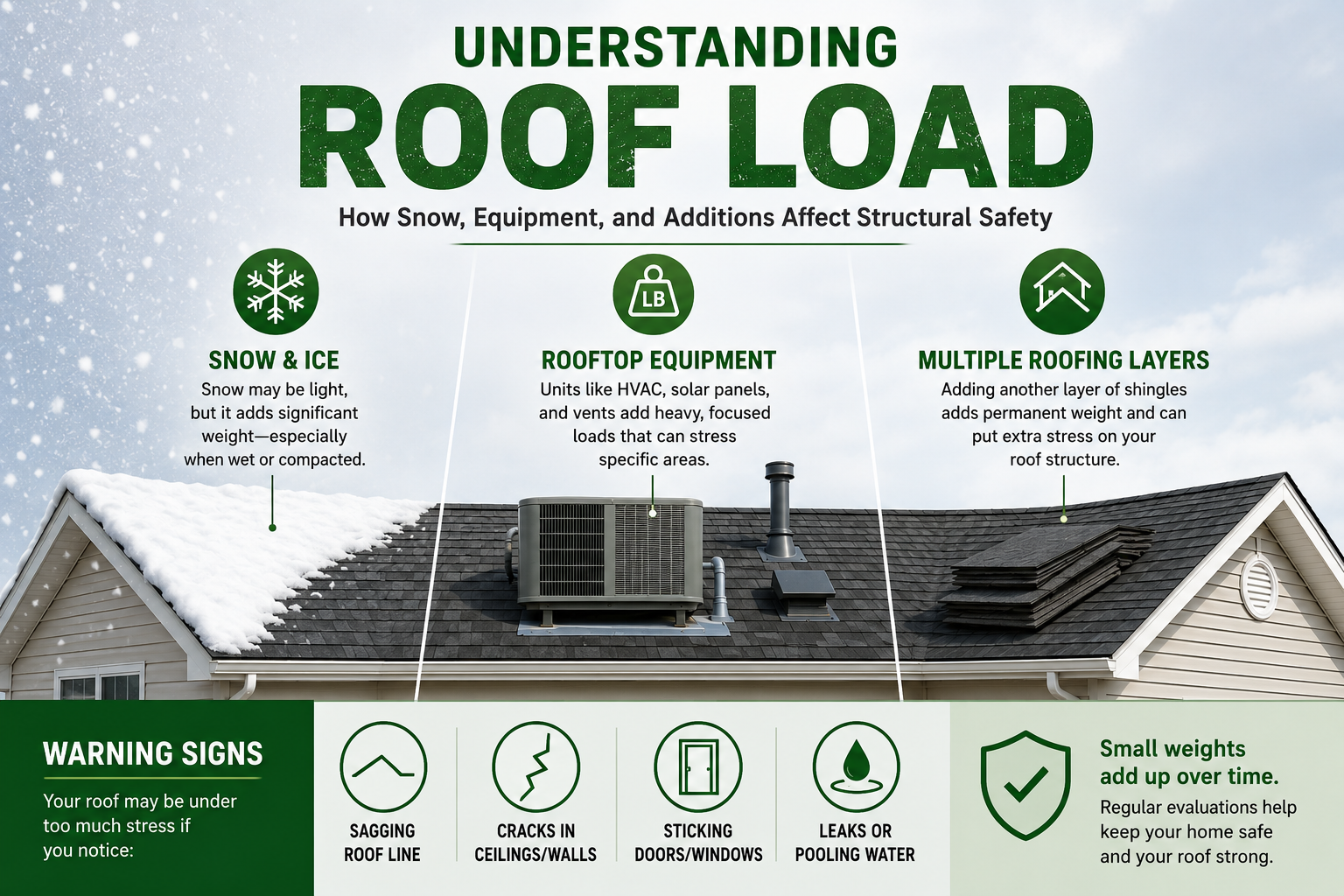
Snow is one of the leading causes of rapid roof loading.
A few inches may not sound like a lot, but wet and compacted snow can weigh substantially more. This accumulation builds up very quickly, especially when snow remains on the roof for several days due to particular circumstances.
Ice poses yet another threat to the roof’s stability. If snow starts melting and then freezes again, it can result in an uneven ice formation and trapping water. The load is not evenly distributed anymore.
As far as our experience shows, it is not only about the amount of fallen snow but also about how long it stays and how unevenly it builds up.
Rooftop Equipment: Small Additions, Big Impact
As years pass by, some homeowners may find themselves installing new pieces such as heating/cooling units, solar energy collectors, and new ventilation systems.
Such installations do not simply increase the amount of weight placed on your home’s structure; they also concentrate that weight into a particular point. Concentrated weight can have an increased effect compared to more widely distributed weight.
While the effects of heavy snow tend to be evenly distributed across the entire roof structure, the added weight from equipment will target specific regions.
Multiple Roofing Layers: When Convenience Adds Stress
Putting another layer of shingles above the already installed roof layer is an option that most homeowners look into.
While it may appear to be a faster and cheaper way to do things, it puts more weight onto the home permanently.
Over time, that added weight can:
- Additional stress on the framework
- Causing it to sag
- Make it difficult to find any problems beneath
As the extra weight accumulates, it will put more pressure on the home’s structure over time.
Warning Signs Your Roof May Be Under Too Much Stress
It may not always happen right away, but when the weight becomes excessive, it usually becomes evident slowly over time.
There are several warning signs that we advise home owners to watch out for:
- Slight roof line sag
- Cracking on ceilings/walls
- Sticking doors/windows
- Leaking/Pooling Water
They do not always necessarily indicate a problem, but are certainly worth looking into.
Why Proper Evaluation Matters
Your roof load is not something that you can evaluate based on observation of your roof.
Experience plays an important role in determining the weight distribution and the way the roof handles its load.
We generally advise our clients to have their roofs inspected before:
- Installing any solar panels or other equipment on the roof
- Laying a new roofing material
- Following an extremely snowy winter period
Neglecting these recommendations may cause additional strain to be placed on your roof.
How We Help Homeowners Make Informed Decisions
At Topper Roofing, we always take into consideration the whole system, not only the roofing material.
Having been around for more than thirty years and having installed roofs on many thousands of houses, we know firsthand how slight modifications impact overall performance.
This is why when we inspect your roof, we consider how your roof manages the load, where possible stress points may be formed, and what this may mean for your home.
The purpose behind all of this is to help you understand everything about your roof and make smart decisions.
Small Weights Add Up Over Time
Roof issues do not just happen because of one thing alone.
It may actually be the combination of multiple factors that have caused roof damage, like additional weight, climate change, and other choices made over time.
While snow buildup, rooftop equipment, and another layer to your roof individually might seem fine, taken all together, they add even more weight than the roof is built to bear.
Understanding that early can help you avoid bigger problems down the line, and keep your home protected.
If you’re concerned about your roof or want peace of mind, our team at Topper Roofing will evaluate how your roof handles weight and provide clear recommendations tailored to your home.
Contact us for more information about our services and how we help Maryland homeowners protect their roofs.