
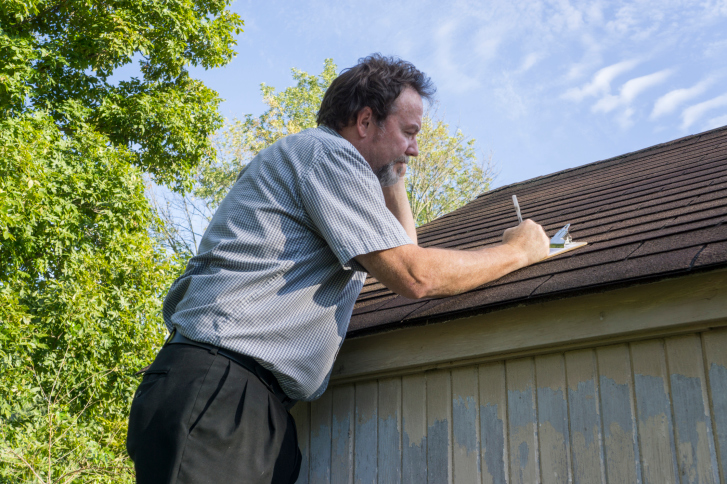
What do you do when you suspect you have a roof leak? Here are tips for locating roof leaks and repairing them, too.
Leaking roofs can be annoying, but they can also become dangerous. What do you do when you suspect you have a roof leak? Although it is best to rely on professional assistance, there are some steps you can undertake to perform basic maintenance until professional roofers can come. Here are tips for locating roof leaks and repairing them, too.
The Source of Roof Leaks
Believe it or not, the source of a roof leak will not be in the same place as where you spot the leak in the first place. In order to figure out where the source of a roof leak, is you will have to imagine you are water, too. Water can sneak in through:
- Broken down shingles
- Loose nails
- Worn out sealant for roof flashing
- Where roof planes meet
Once water gets in, it will find a place it can continue to drip downwards. Leaking water can ruin your furniture and other elements of your home. Finding a roof leak is easiest during the day. Take a flashlight with you when you venture into the attic and look for any dampness in the attic or light shining through the roof. You can find moisture damage in dry weather, and see rain coming in wet weather.
Locating Roof Leaks
A simple visual inspection might not be enough. Wait until there is no rain and go up to the top of the house with a friend or relative. One person stands on the roof, the other in the attic. The person on the roof should carry a garden hose, while the person in the attic should carry a bucket and a reliable flashlight. Find the leak by using the hose and bucket. Then mark the location of the leak with a nail and some chalk. After that, emergency repairs may be in order.
How to Make Emergency Repairs
You will need some plastic sheeting for this step. Cover the leak with the plastic sheeting. Cut as necessary using a utility knife. You also need two 2x4s to hold the sheeting in place. Attach the sheeting to the 2x4s with staples. Then be sure to nail the 2x4s together. Place the sandwiched sheet and boards over the leak. Add a second layer of sheeting and 2x4s to ensure the first layer does not get blown around by the wind. Also be sure to not attach this sandwich of materials directly to the roof.
Contact Topper Construction Today!
If you’re interested in having a roof system, siding, or water drainage system installed in your new home, or would like a free estimate, contact Topper Construction. With Topper Construction, you’ll see the benefit of nearly three decades of experience. Contact Topper Construction at 301-874-0220 or email us at info@topperconstruction.com if you are interested in learning more. We can help you with projects in Delaware, Maryland, Pennsylvania, West Virginia, and Northern Virginia.